Olfactory Memory
In many Italian homes, memory begins in the kitchen.
Long before photographs are taken or stories are written down, there is the slow language of scent rising from a pot. Garlic warming in olive oil. Tomatoes softening as they simmer. Fresh basil torn between fingers and dropped into sauce. These fragrances travel through hallways and stairwells, settling quietly into the walls of a home. Years later, the same aroma can appear again and suddenly a whole world returns.
This is what scientists call olfactory memory—the powerful connection between scent, memory, and emotion. Of all our senses, smell has the most direct path to the part of the brain where memory lives. One breath can awaken something long buried: a kitchen, a voice, the warmth of a table filled with family.
In Italian culture, food has always been more than nourishment. It is a form of inheritance.
Recipes pass from one generation to the next not always through written instructions, but through gesture and repetition. A handful of salt. A little more wine. The slow patience of letting something cook until the smell tells you it is ready. These traditions live in the senses, especially in smell. Before we understand them intellectually, we recognize them through the air around us.
For many families with roots in southern Italy, the kitchen was the center of life. The smell of sugo simmering for hours on a Sunday morning would fill the house long before anyone sat down to eat. The scent itself was an announcement: family would gather, stories would be shared, the day would unfold around the table.
These aromas become markers of belonging.
The smell of tomato sauce can carry the presence of a grandmother standing over the stove. The fragrance of roasted peppers can recall a late summer afternoon when food was prepared together. Even the earthy scent of flour and eggs on a wooden table can return someone to the quiet ritual of making pasta by hand.
In my reflections for What We Carried With Us, I often think about how these scents function like invisible archives. While objects break, disappear, or become scattered across continents, smell has the strange ability to survive within us. A single fragrance encountered years later can reopen the past with remarkable clarity.
Perhaps this is why food holds such a powerful place in Italian cultural memory.
It is not only about taste. It is about atmosphere, presence, and continuity. The kitchen becomes a space where generations overlap—where the gestures of those who came before us continue to move through our own hands.
Sometimes I wonder if what we truly carry with us from our ancestors is not only language, photographs, or recipes, but these small, sensory echoes that remain inside the body.
A scent rises.
Garlic, tomatoes, basil.
And suddenly, we are home again. 🍅🌿
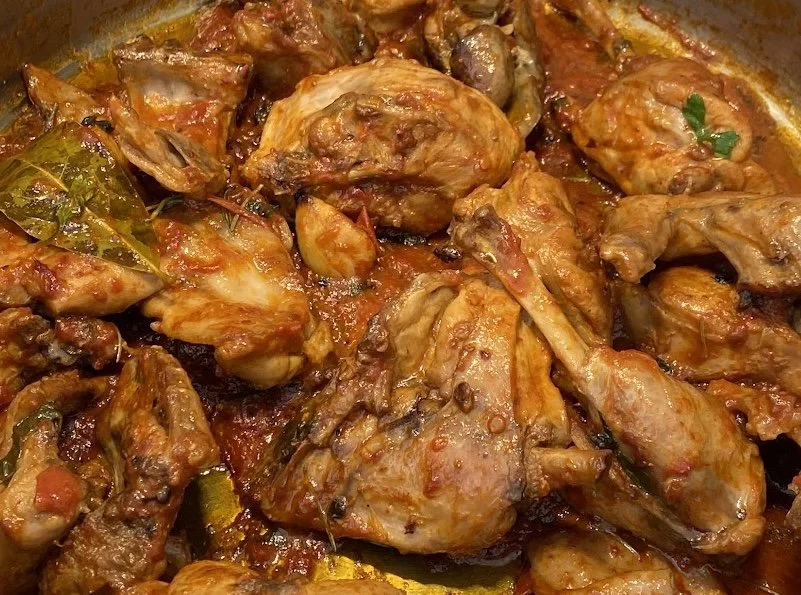
Coniglio alla cacciatora
